
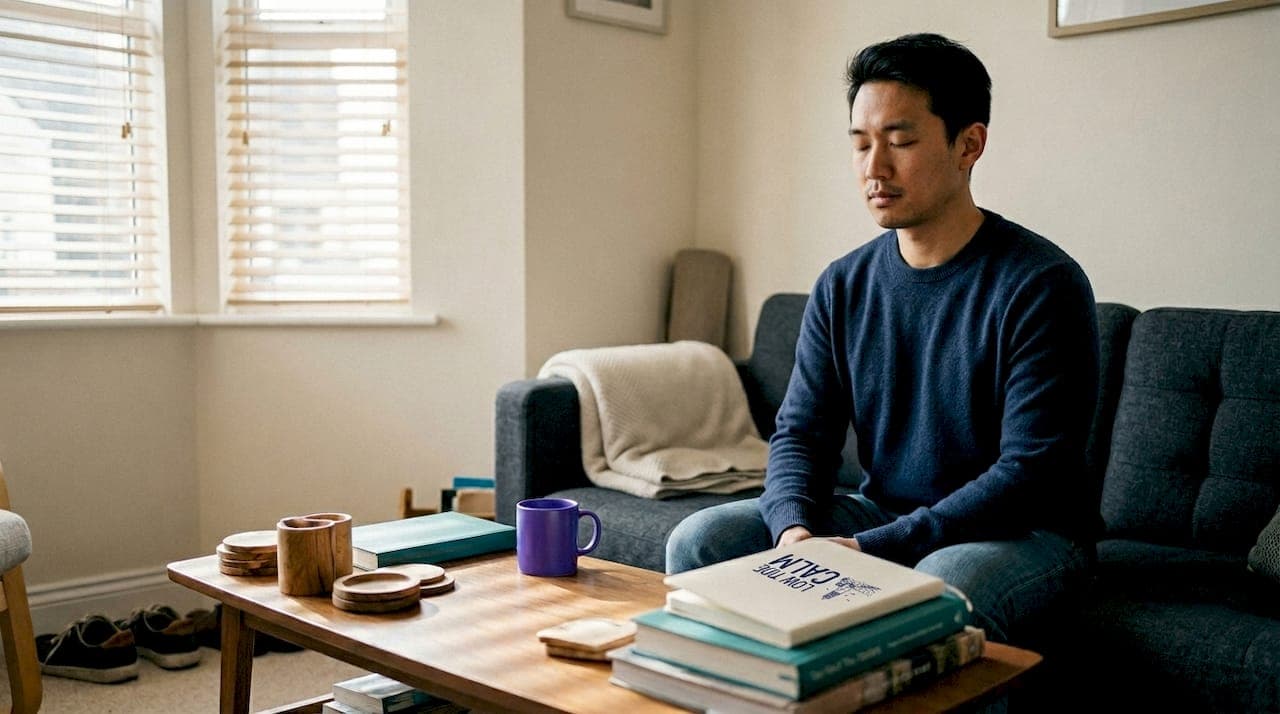
TL;DR:
- Most breathwork lists are overly complicated and rarely explained clearly, making beginners feel overwhelmed.
- Starting with simple techniques that require minimal counting or breath-holding is most effective, especially for neurodivergent or burned-out individuals.
- Focusing on a few accessible methods like diaphragmatic breathing or cyclic sighing and practicing consistently yields the best results over complex, elaborate routines.
Most breathwork lists read like a menu at a restaurant where you don't speak the language. There are dozens of options, none of them explained properly, and you're already tired before you've ordered. If you're burned out, neurodivergent, or both, the last thing you need is a 47-step pranayama sequence or a wellness influencer telling you to "just breathe." The good news is that the evidence doesn't support complexity. A practical starting rule, backed by Harvard Health, is to begin with techniques that require minimal counting or breath-holding, and build from there only if you want to.
Table of Contents
- How to choose a breathwork technique that actually works for you
- 5 accessible breathwork techniques and how to use them
- Which breathwork technique is best for your needs? (comparison table)
- Adapting and troubleshooting: getting comfortable and staying safe
- Why most breathwork lists overcomplicate everything (and what actually works)
- Explore more breathwork and mindfulness support
- Frequently asked questions
Key Takeaways
| Point | Details |
|---|---|
| Pick simple techniques | Start with breathwork methods that use minimal counting and avoid complex holds for best results, especially if you’re burned out or neurodivergent. |
| Cyclic sighing evidence | Just five minutes a day of cyclic sighing can noticeably improve mood and regulate anxiety within a month, backed by research. |
| Modify for comfort | Breathwork can be adapted for your comfort and safety; use shorter phases or stop if you feel overwhelmed. |
| Safety first | Breathwork shouldn’t replace professional treatment if you have panic disorder, PTSD, or severe distress—consult a healthcare provider. |
How to choose a breathwork technique that actually works for you
With the selection problem in mind, let's map out what makes a breathwork technique truly accessible.
The sheer volume of breathwork options is a problem in itself. Search "breathwork techniques" and you'll find everything from ancient yogic practices to military stress protocols. Some require precise counting, specific postures, or extended breath-holds that can feel genuinely uncomfortable if your nervous system is already running hot. For burned-out professionals or people with ADHD or autism, that complexity isn't just inconvenient. It can become another source of failure and frustration.
The most useful filter is simplicity. A burnout-friendly selection rule is to start with techniques that require minimal counting and no complex holds. Diaphragmatic breathing, coherent breathing, and cyclic sighing all fit this description. They're accessible on day one, require no equipment, and have a reasonable evidence base behind them.
A few practical criteria worth using when choosing a technique:
- Counting load: Can you do this without tracking multiple numbers simultaneously?
- Physical comfort: Does it require you to sit in a specific posture or hold your breath for extended periods?
- Adaptability: Can you shorten it, slow it down, or pause mid-way without losing the benefit?
- Tolerance: Does it feel calming within a few cycles, or does it immediately trigger discomfort?
If a technique ticks those boxes, it's worth trying. If it doesn't, set it aside for now. That's not failure. That's good self-management.
Breathwork guidance consistently recommends adapting for comfort, starting with shorter counts and adjusting based on how your body responds. This is especially relevant for anyone with a history of anxiety or trauma, where breath manipulation can occasionally feel destabilising. Breathwork is not a replacement for clinical treatment for severe conditions. It's a tool, and like any tool, it works best when it fits the hand holding it.
For neurodivergent adults specifically, the breathwork for neurodivergent minds approach matters. Sensory sensitivities, difficulty with abstract counting, or a tendency to hyperfocus on physical sensations can all affect how a technique lands. Choosing something flexible and low-demand at the start reduces the chance of a bad first experience putting you off entirely.
You can also explore a broader overview of breathwork for stress relief to understand the evidence base before committing to a specific method. And if you want context on how breathwork sits within wider relaxation therapy, that's useful grounding too.
Pro Tip: Use a timer app instead of counting in your head. Set it for the duration of your session and just breathe. Removing the mental arithmetic reduces cognitive load significantly, which matters when you're already stretched.
Signs that a technique is working include a noticeable slowing of your heart rate within a few minutes, a sense of physical heaviness or warmth in your limbs, and reduced urgency in your thoughts. These are signs your parasympathetic nervous system is engaging. They don't always arrive immediately, but they tend to show up within a week of consistent daily practice.
5 accessible breathwork techniques and how to use them
Now that you know how to select, let's walk through five research-backed methods, complete with adaptations.
Common, accessible techniques include box breathing, diaphragmatic breathing, coherent breathing, the physiological sigh, and cyclic sighing. Each has a different profile in terms of complexity, speed, and what it's best suited to. Here's how to use each one.
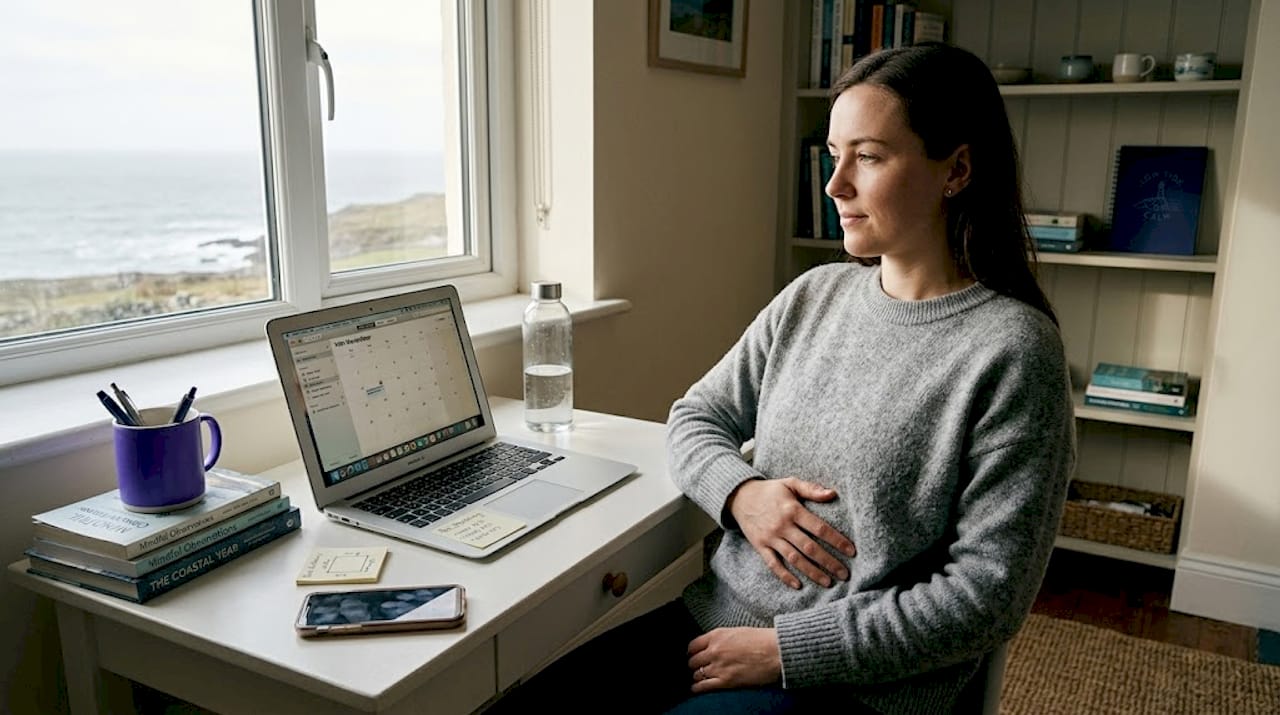
1. Diaphragmatic (belly) breathing
This is the foundation. Place one hand on your chest and one on your belly. Breathe in through your nose so that your belly rises first, not your chest. Exhale slowly. That's it.
- Sit or lie comfortably.
- Inhale through your nose for 4 counts, letting your belly expand.
- Exhale through your nose or mouth for 4 to 6 counts.
- Repeat for 5 minutes.
This is the most forgiving technique on the list. If the counting feels like too much, drop it entirely and just focus on the belly movement.
2. Coherent breathing
This involves breathing at roughly 5 to 6 breaths per minute, which research links to improved heart rate variability and reduced stress. Inhale for 5 counts, exhale for 5 counts. No holds. No complexity.
3. Box breathing
Inhale for 4 counts, hold for 4, exhale for 4, hold for 4. This is more structured and works well once you're comfortable with basic breath awareness. It's used widely in high-pressure occupational settings. If the holds feel uncomfortable, shorten them to 2 counts or remove them entirely to start.
4. Physiological sigh
Take a normal inhale through your nose, then add a short second inhale on top of it (like a sniff), then exhale fully and slowly through your mouth. This double inhale re-inflates the air sacs in your lungs and triggers a rapid parasympathetic response. It's one of the fastest-acting techniques available and requires no counting at all.
5. Cyclic sighing
Similar to the physiological sigh but practised in a sustained pattern for around 5 minutes. Inhale through the nose, add a second short inhale, then exhale slowly and fully. Repeat. The mechanisms behind breathwork like this involve direct influence on the autonomic nervous system through changes in carbon dioxide and oxygen balance, as well as vagal nerve stimulation.
Some things to watch for across all of these:
- Dizziness or tingling: Usually means you're breathing too fast or too deeply. Slow down.
- Feeling more anxious: This can happen, particularly with techniques involving breath-holds. Switch to a simpler method.
- Yawning or sighing spontaneously: A good sign. Your body is resetting.
If breathwork consistently feels overwhelming, that's worth paying attention to rather than pushing through. And for ideas on weaving these techniques into ordinary moments, breathwork for daily life offers some realistic, low-effort approaches.
Pro Tip: Start with just one cycle if you're feeling overwhelmed. One physiological sigh takes about 10 seconds. That's a legitimate starting point. You don't need a 20-minute session to get a measurable effect.
Which breathwork technique is best for your needs? (comparison table)
But how do the main breathwork options actually stack up against one another? Here's a clear guide.
| Technique | Ease of use | Neurodivergent-friendly | Best for | Speed of effect | Evidence strength |
|---|---|---|---|---|---|
| Diaphragmatic breathing | Very easy | High | General stress, beginners | Moderate | Strong |
| Coherent breathing | Easy | High | Anxiety, sleep, HRV | Moderate | Strong |
| Box breathing | Moderate | Medium | Focus, acute stress | Moderate | Good |
| Physiological sigh | Very easy | Very high | Immediate stress spike | Fast | Strong |
| Cyclic sighing | Easy | High | Daily mood, anxiety | Fast | Strong |
Cyclic sighing produced the greatest daily improvement in positive feelings and reduced anxiety and negative mood compared with other breathwork formats in a 2023 Stanford study. That's a meaningful finding. It's also one of the easiest techniques on the list, which makes it particularly useful for people who've struggled with more complex methods.
The evidence base for breathwork centres on autonomic nervous system regulation, specifically parasympathetic activation, heart rate variability improvement, and measurable reductions on anxiety and stress scales. This isn't wishful thinking. It's physiological. Your breath has a direct mechanical relationship with your nervous system that no other voluntary action quite replicates.
A few additional notes for neurodivergent readers:
- Box breathing involves four separate counts and two holds. For some people with ADHD, the counting is actually helpful as a focus anchor. For others, it's too much to track. Try it and see.
- Cyclic sighing and the physiological sigh require no counting at all, which makes them the most accessible options for anyone who finds numerical patterns difficult or distracting.
- Coherent breathing can be done with a simple pacer app, removing the counting element entirely.
For a deeper look at breathwork with clinical applications, the breathwork with clinical evidence page covers how these techniques translate into specific health contexts. And if you're curious about mindfulness for anxiety more broadly, that sits alongside breathwork as a complementary approach.
Adapting and troubleshooting: getting comfortable and staying safe
Even simple techniques don't work for everyone right away. Here's how to adapt or troubleshoot issues safely.
The most common problems people run into with breathwork are dizziness, emotional responses, increased anxiety, or just not being sure if they're doing it right. All of these are manageable.
Dizziness or light-headedness usually means you're over-breathing, taking in too much oxygen too quickly. Slow your pace, reduce the depth of your inhales, and breathe through your nose rather than your mouth. If it persists, stop and breathe normally.
Emotional responses like crying or feeling unexpectedly sad are more common than people expect. Breathwork can shift your physiological state quickly, and that sometimes surfaces emotions that were sitting just below the surface. It's not dangerous. It's worth noting, though, and if it happens regularly, working with a facilitator is sensible.
Increased anxiety during breath-holds is a signal to drop the holds entirely and work with flow-based techniques instead. Some people, particularly those with a history of panic, find that any deliberate breath manipulation initially increases vigilance. Starting with the physiological sigh, which requires no counting and no holding, is often the better entry point.
"Adaptation is not failure. It's the whole point. The technique should fit you, not the other way around. Start shorter, start simpler, and build only when it feels stable."
Some clear signals to stop and seek support:
- Chest pain or significant shortness of breath
- Persistent panic or dissociation during sessions
- Symptoms that worsen consistently over multiple sessions
Breathwork should not replace treatment for severe conditions such as panic disorder or PTSD. If you're in that territory, please talk to your GP or a qualified mental health professional before working with breath manipulation techniques.
If you've wondered why deep breathing sometimes makes anxiety worse, that's a genuinely useful question and the answer involves some counterintuitive physiology around carbon dioxide tolerance. Worth reading before you write breathwork off entirely.
Why most breathwork lists overcomplicate everything (and what actually works)
Here's a hard-earned perspective from experience and client feedback.
The breathwork world has a complexity problem. There's a tendency, particularly in wellness content, to equate sophistication with effectiveness. The more elaborate the technique, the more credible it looks. But that logic falls apart almost immediately when you're working with someone who is genuinely burned out or neurodivergent.
In practice, the people who benefit most from breathwork are not the ones who master the most advanced patterns. They're the ones who find two or three techniques that feel manageable and do them consistently. Two minutes of cyclic sighing every morning before you open your phone is worth more than a 45-minute breathwork session you do once and never repeat.
The real-world effect of simplifying down to two or three core methods is significant. It removes the decision fatigue. It makes practice feel achievable rather than aspirational. And it means you're actually doing it, which is the only version that works. Consistency matters far more than precision. A slightly imperfect diaphragmatic breath done daily will do more for your nervous system than a technically perfect box breathing sequence done once a fortnight.
From lived experience with ADHD and burnout, the most sustainable approach is to attach breathwork to something that already happens. Before your first coffee. At a red light. After you close your laptop. Habit stacking removes the need for motivation, which is in short supply when you're running on empty. For practical emotion regulation tips that sit alongside breathwork, there's more on that elsewhere on the site.
The fancy stuff has its place. But for 99% of people reading this, the basics done regularly will get you further than anything more elaborate.
Pro Tip: Consistency matters more than perfection. Two minutes every day beats twenty minutes once a week. Set a reminder, keep it short, and lower the bar enough that you'll actually do it.
Explore more breathwork and mindfulness support
If you're ready to deepen your practice or need more personalised guidance, these resources can help.
Low Tide Calm offers structured, one-to-one online breathwork and mindfulness sessions built around the Buteyko method, with specific attention to neurodivergent needs and burnout recovery. If you want to understand how breathwork applies to specific health contexts, the breathwork for asthma page is a good starting point for seeing the clinical side of things. For tailored approaches to ADHD and autistic experience, support for neurodivergent minds covers how sessions are adapted to fit different needs. And if you want practical, low-effort ideas for fitting breathwork into a real day rather than an idealised one, everyday breathwork ideas is worth a look. The free Low Tide Calm app also includes a regulation toolkit and dopamine menu designed specifically for neurodivergent users.
Frequently asked questions
How long should I practise breathwork each day for results?
Just five minutes a day of cyclic sighing has been shown to reduce anxiety and improve positive mood in research settings, making it one of the most time-efficient options available.
Are breathwork techniques safe for everyone?
Most techniques are broadly safe, but anyone with panic disorder, PTSD, or significant health concerns should consult a doctor first, as some adaptations or alternative support may be more appropriate than breath manipulation.
Why does breathwork make me feel light-headed or emotional?
Light-headedness usually means you're breathing too fast or too deeply, while emotional responses are common as your physiological state shifts; both tend to settle with shorter, gentler sessions and adjustments to pace.
Do I need a teacher or therapist to benefit from breathwork?
Many techniques are genuinely self-teachable, but professional guidance is worth considering if you experience distress, have complex health needs, or want a structured and personalised plan from the start.
How do I know which technique is best for me?
Start with minimal counting techniques like cyclic sighing or diaphragmatic breathing, notice what feels calming after a few days of regular use, and adjust from there rather than trying to optimise before you've begun.
Recommended
- Breathwork for Asthma - Improve Your Breathing - Buteyko Method - Low Tide Calm
- Breathwork & Mindfulness for Neurodivergent Minds
- Breathwork in Real Life: 6 Mundane Moments That Work
- Low Tide Calm App | Free Breathwork and Mindfulness App
- Mindfulness and Meditation: Techniques for Reducing Stress – Lunix
- Relaxation therapy methods: reduce stress and boost wellness