

Mindfulness gets thrown around a lot. It's on corporate wellness posters, in app store descriptions, and in well-meaning advice from people who've never actually sat with a racing mind for more than five minutes. The result? A lot of people try it once, feel nothing, and write it off. But here's what most of those sources miss: mindfulness isn't a single technique you dip in and out of. A mindfulness pathway is a structured, evolving approach that builds real skills over time, and understanding the difference between that and a random breathing exercise could change how you manage stress and anxiety entirely.
Table of Contents
- What is a mindfulness pathway?
- Professional mindfulness pathways and training
- Are mindfulness pathways effective for stress and anxiety?
- How to choose and start your own mindfulness pathway
- Why the best mindfulness pathway is the one you adapt
- Explore guided mindfulness pathways and support
- Frequently asked questions
Key Takeaways
| Point | Details |
|---|---|
| Structured progression | A mindfulness pathway is a guided journey that builds over time, not a quick one-off fix. |
| Individual adaptation | Effectiveness increases when pathways are tailored for unique needs, such as neurodivergence or workplace stress. |
| Professional support | Joining a formal programme or getting trained guidance enhances both results and accountability. |
| Know limitations | Mindfulness is powerful but not a cure-all; realistic expectations and evidence matter. |
What is a mindfulness pathway?
A mindfulness pathway is a structured journey through mindfulness practice. It's not a one-off session or a five-minute app exercise before bed. Think of it as a progression, where each stage builds on the last, guided by clear goals, regular practice, and honest self-assessment along the way.
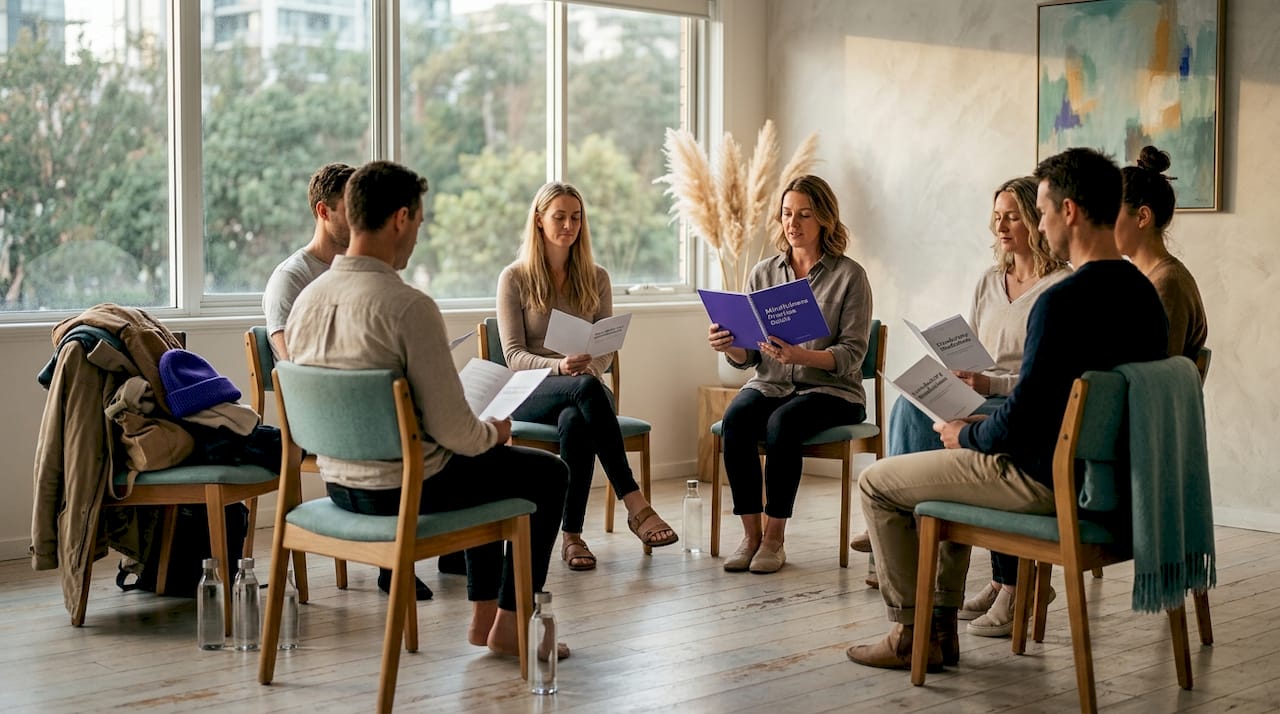
The key elements that distinguish a pathway from casual practice are consistency, structure, and feedback. You're not just meditating when you feel like it. You're following a sequence of skills, noticing what works and what doesn't, and adjusting accordingly. That might mean working through a six-week programme, attending guided sessions, or using a curriculum that moves from foundational awareness to more nuanced regulation techniques.
This matters because calm your mind daily doesn't happen through occasional effort. It requires repetition, just like any other skill. A person who runs once a month doesn't build cardiovascular fitness. The same logic applies here.
It's worth being honest: mindfulness isn't a panacea, and the evidence for its benefits varies depending on the person and the outcome being measured. A pathway doesn't guarantee results, but it does give you the best possible conditions for results to happen.
Here's how a mindfulness pathway compares to ad-hoc practice:
| Feature | Mindfulness pathway | Ad-hoc practice |
|---|---|---|
| Structure | Sequenced stages and goals | Random or intuitive |
| Guidance | Facilitated or curriculum-based | Self-directed |
| Self-assessment | Built in at regular intervals | Rarely included |
| Skill progression | Deliberate and cumulative | Inconsistent |
| Accountability | Often includes check-ins | Usually absent |
| Outcomes | More predictable over time | Variable |
The table above isn't meant to dismiss casual practice. Starting somewhere is always better than not starting. But if you're dealing with genuine stress, anxiety, or burnout, an ad-hoc approach is a bit like treating a persistent back problem with the occasional stretch. It might take the edge off, but it won't address the underlying pattern.
Professional mindfulness pathways and training
For those who want to go deeper, whether for personal reasons or to support others professionally, formal mindfulness pathways offer a more rigorous structure. These exist on a spectrum, from structured personal programmes to full teacher certification.
The most well-known formal framework is Mindfulness-Based Stress Reduction, commonly known as MBSR. Developed by Jon Kabat-Zinn at the University of Massachusetts in the late 1970s, MBSR is an eight-week programme combining meditation, body awareness, and movement. Beyond personal practice, professional training pathways exist for those who want to deliver mindfulness programmes, pairing personal practice with structured teaching education. This is significant because it means the field has moved well beyond self-help territory into something with genuine pedagogical rigour.
For therapists, coaches, or practitioners looking to integrate mindfulness into their work, mindfulness training for therapists provides a pathway that bridges personal development with professional application. This kind of dual focus, learning it yourself while learning how to teach it, tends to produce more grounded and effective practitioners.
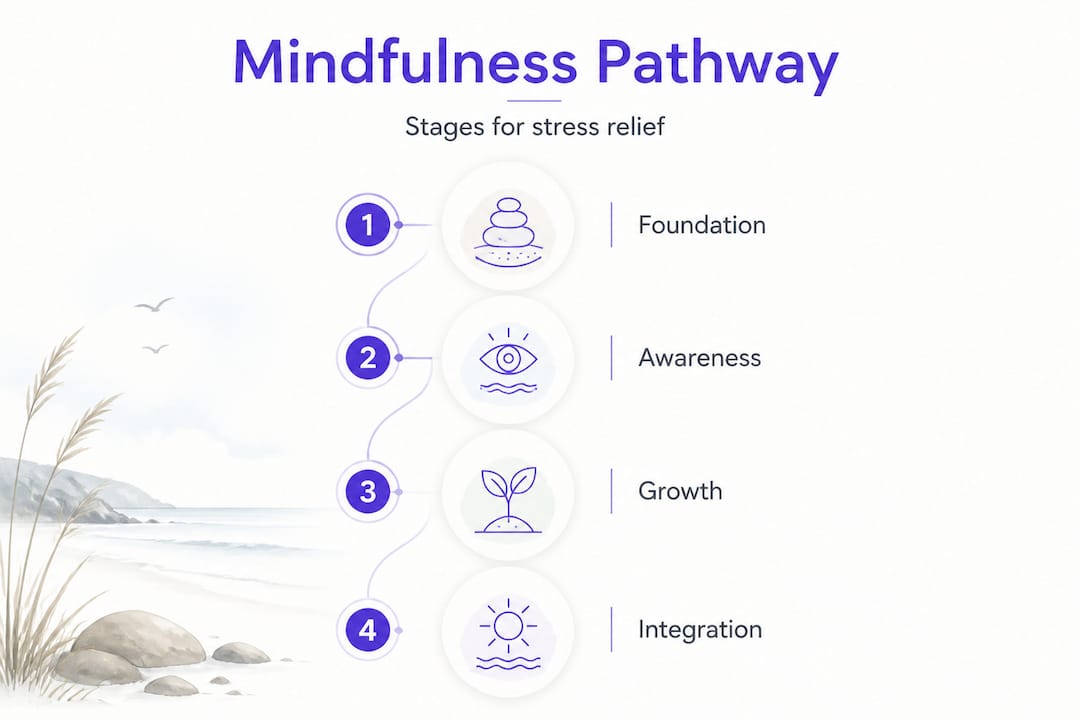
Here's a general overview of how formal mindfulness training tends to be structured:
| Stage | Focus | Typical duration |
|---|---|---|
| Foundation | Personal daily practice and awareness | Weeks 1 to 2 |
| Skill building | Breath, body scan, and attention training | Weeks 3 to 5 |
| Application | Stress response, emotion regulation | Weeks 6 to 8 |
| Integration | Reflection, adaptation, and sustainability | Ongoing |
| Professional (optional) | Teaching methodology and supervision | Several months |
For those who are neurodivergent or managing sensory sensitivities, standard formal programmes may need adaptation. Pathways for neurodivergent minds recognise that traditional mindfulness formats, particularly those involving long silent sits or body-focused exercises, can sometimes be uncomfortable or counterproductive without proper support.
Pro Tip: Before committing to a formal programme, ask yourself whether your primary goal is personal regulation or professional development. If it's the former, a structured six-week personal pathway is often more practical and sustainable than jumping straight into teacher training. If it's both, look for programmes that explicitly integrate personal practice into the professional curriculum.
Are mindfulness pathways effective for stress and anxiety?
The honest answer is: often yes, but not always, and not for everyone in the same way. The research base for mindfulness is genuinely substantial. Studies consistently show reductions in perceived stress, improvements in emotional regulation, and decreased anxiety symptoms among people who engage with structured mindfulness programmes. But the evidence on mindfulness for stress also shows that effect sizes vary considerably, and not every person benefits equally.
For high-pressure professionals, the challenge is often less about willingness and more about time and cognitive load. When your nervous system is already running hot from back-to-back meetings, tight deadlines, or shift work, adding a new practice can feel like one more demand. This is why the format of a pathway matters enormously. Short, repeatable, and low-barrier practices tend to have better uptake and retention than longer, more intensive formats for this group.
For neurodivergent individuals, including those with ADHD, autism, or sensory processing differences, standard mindfulness approaches can occasionally make things worse rather than better. Sitting still and focusing on breath can amplify discomfort or restlessness. Understanding drawbacks for neurodivergent people is an important part of choosing the right pathway rather than assuming one format fits all.
Factors that influence how effective a mindfulness pathway will be for you:
- Consistency of practice: Even ten minutes daily outperforms an hour once a week
- Quality of guidance: Working with a skilled facilitator reduces the risk of unhelpful experiences
- Relevance of the format: Movement-based or sensory-friendly approaches suit some people far better than seated meditation
- Your starting point: Those with trauma histories or high baseline anxiety may need a more gradual, trauma-aware approach
- Realistic expectations: Pathways reduce the intensity and frequency of stress responses over time; they don't eliminate stress altogether
- Integration into daily life: Practices that connect to real situations, like a difficult conversation or a stressful commute, tend to stick better than abstract exercises
A notable finding from meta-analyses is that mindfulness isn't a panacea, and benefits vary by outcome and individual circumstances. This isn't a reason to avoid it. It's a reason to approach it with clear eyes and a format that actually suits your life.
How to choose and start your own mindfulness pathway
This is where things get practical. Knowing that pathways exist is one thing. Actually starting one is another. Here's a straightforward process for getting going without overcomplicating it.
- Identify your primary goal. Are you managing work-related stress, anxiety, burnout, or sleep difficulties? Being specific helps you choose a pathway that addresses your actual situation rather than a generic one.
- Assess your current relationship with mindfulness. Have you tried it before? Did it help? Did it feel uncomfortable? Your history with practice is useful information, not a judgement.
- Choose a format that fits your life. A busy professional with irregular hours needs something different from someone with a predictable routine. Short daily practices are often more effective than long weekly sessions.
- Find appropriate guidance. This could be a structured programme, a trained facilitator, or a well-designed curriculum. The key is that someone with knowledge has shaped the sequence.
- Commit to a defined period. Six weeks is a reasonable minimum to notice genuine change. Less than that and you're still in the adjustment phase.
- Build in self-reflection. At the end of each week, spend five minutes noting what you observed. What felt manageable? What was difficult? This keeps the practice alive and responsive.
- Adjust without abandoning. If a specific technique isn't working, change the technique, not the whole pathway. Understanding the seven attitudes of mindfulness can help here, particularly the attitudes of non-striving and beginner's mind, which encourage flexibility rather than rigid adherence.
For those in high-pressure jobs, it's worth knowing that mindfulness and cognitive approaches overlap more than most people realise. The CBT and mindfulness overlap is well-documented, and many of the skills from one reinforce the other, particularly around noticing thought patterns and choosing responses rather than reacting automatically.
Pro Tip: If you're neurodivergent or find traditional seated practice difficult, start with movement-based or breath-focused techniques rather than open awareness meditation. Walking mindfulness, rhythmic breathwork, or even mindful stretching can provide the same neurological benefits without the sensory discomfort that stillness sometimes creates.
It's also worth noting that mindfulness isn't a panacea. Starting a pathway with the expectation that it will fix everything is a setup for disappointment. Starting with the expectation that it will gradually improve your capacity to respond to stress, rather than eliminate it, is far more realistic and far more likely to keep you going.
Why the best mindfulness pathway is the one you adapt
Here's something that doesn't get said enough: the most perfectly designed mindfulness programme in the world is useless if it doesn't fit your actual life. I've seen people invest in high-quality training, follow every step correctly, and still feel like it's not working, because the format was built for someone else's nervous system, schedule, or sensory experience.
Rigid adherence to a pathway often backfires. When people feel they're doing it wrong because they can't sit still for twenty minutes or because their mind wanders constantly, they stop. But a wandering mind isn't a failure of mindfulness. It is mindfulness. The practice is noticing the wander and returning. That's the whole thing.
The most effective pathways I've seen, both personally and in working with clients, are the ones that evolve. They start with a clear structure, because structure matters enormously at the beginning, and then they loosen as the person develops their own understanding of what regulation actually feels like for them. Someone with ADHD might find that a two-minute breath practice before a meeting is their version of a twenty-minute sit. That's not a compromise. That's intelligent adaptation.
The hidden benefits of mindfulness often show up in unexpected places, not during formal practice, but in the moments between. In the pause before a sharp reply. In the noticing of tension before it becomes a headache. These are the real results of a pathway, and they don't come from following instructions perfectly. They come from making the practice genuinely yours.
Explore guided mindfulness pathways and support
If you've read this far and you're thinking about where to start, or where to go next, it's worth knowing that support exists that's specifically designed for people in high-pressure situations and for those whose nervous systems don't respond well to one-size-fits-all approaches.
At Low Tide Calm, the focus is on practical, repeatable regulation skills that work in real life, not just in a quiet room on a Tuesday morning. Whether you're looking to find mindfulness resources that suit your lifestyle, or you're neurodivergent and need a format that actually accounts for how your mind works, there are structured pathways available that are trauma-aware, evidence-informed, and genuinely flexible. For those managing respiratory conditions alongside stress, there's also specific guidance on breathwork for asthma to ensure safety and comfort. And if you're looking for a starting point tailored to neurodivergent experience, support for neurodivergent minds offers a considered, adapted approach that doesn't ask you to fit a mould.
Frequently asked questions
What makes a mindfulness pathway different from simple meditation?
A mindfulness pathway is a structured progression with guidance and self-reflection built in, whereas simple meditation is typically a standalone activity without a broader framework. The pathway approach means your practice develops and deepens over time rather than staying at the same level.
Do I need to follow a professional programme for mindfulness to work?
You can absolutely start on your own, but structured pathways provide added guidance, accountability, and more consistent results. Professional training pathways pair personal practice with structured education, which tends to accelerate progress and reduce the risk of unhelpful experiences.
Are mindfulness pathways suitable for neurodivergent people?
Mindfulness pathways can be genuinely helpful for neurodivergent people, though they often require adaptations in format, pacing, or technique to be comfortable and effective. Standard approaches aren't always the right starting point, and mindfulness isn't a panacea for everyone in the same way.
What are common barriers to starting a mindfulness pathway?
The most common barriers are unrealistic expectations, a lack of clear structure, and the belief that it has to look a certain way to count. Mindfulness isn't a panacea, and approaching it with honest, flexible expectations removes a significant amount of the pressure that stops people before they've really begun.